
Article: Gingham in Singapore: The Farmhouse Pattern Your Home Has Been Waiting For

Gingham in Singapore: The Farmhouse Pattern Your Home Has Been Waiting For
I have never met a home that gingham didn't make more beautiful.
That might sound like a bold claim. But after years of searching for pieces that bring genuine warmth into a Singapore space — sourcing fabrics in the English countryside, finding the right weight and quality of cotton — I keep coming back to the same truth. Gingham does something that very few patterns can. It makes a room feel like someone loves being in it.
In Singapore, where so many of us are working with compact home layouts and interiors that tend toward the clean and the minimal, that quality feels especially valuable. We are a city that moves fast. Our homes, I think, deserve to move a little slower. And gingham — more than almost any pattern I know — has the ability to create exactly that feeling.

Styling a Gingham Tablecloth in Your Singapore Home
If I could only tell you one thing about styling with gingham, it would be this: start with your dining table, and let everything else follow.
There is something about a gingham tablecloth that changes the feeling of a meal before a single dish is set down. It tells the people sitting at your table that this was thought about. That someone took a few extra minutes to make the space feel worthy of the time you are about to spend together. In Singapore, where gathering around food is one of the deepest ways we show love, that small gesture carries more weight than people realise.
Our gingham tablecloths at Cherry Pie Farmhouse are made from OEKO-Tex Standard 100 certified cotton — which means that the cotton has been independently tested and certified free from harmful substances — and never with any polyester. It is fabric that is genuinely safe for the hands that made it and hold it, the children who press their faces against it, and the planet it came from. In our tropical climate, it breathes beautifully, (machine) washes easily, and softens with every launder.
The best tablecloth is the one that looks even more beautiful after a hundred Sunday lunches than it did the day it arrived. This is that tablecloth.

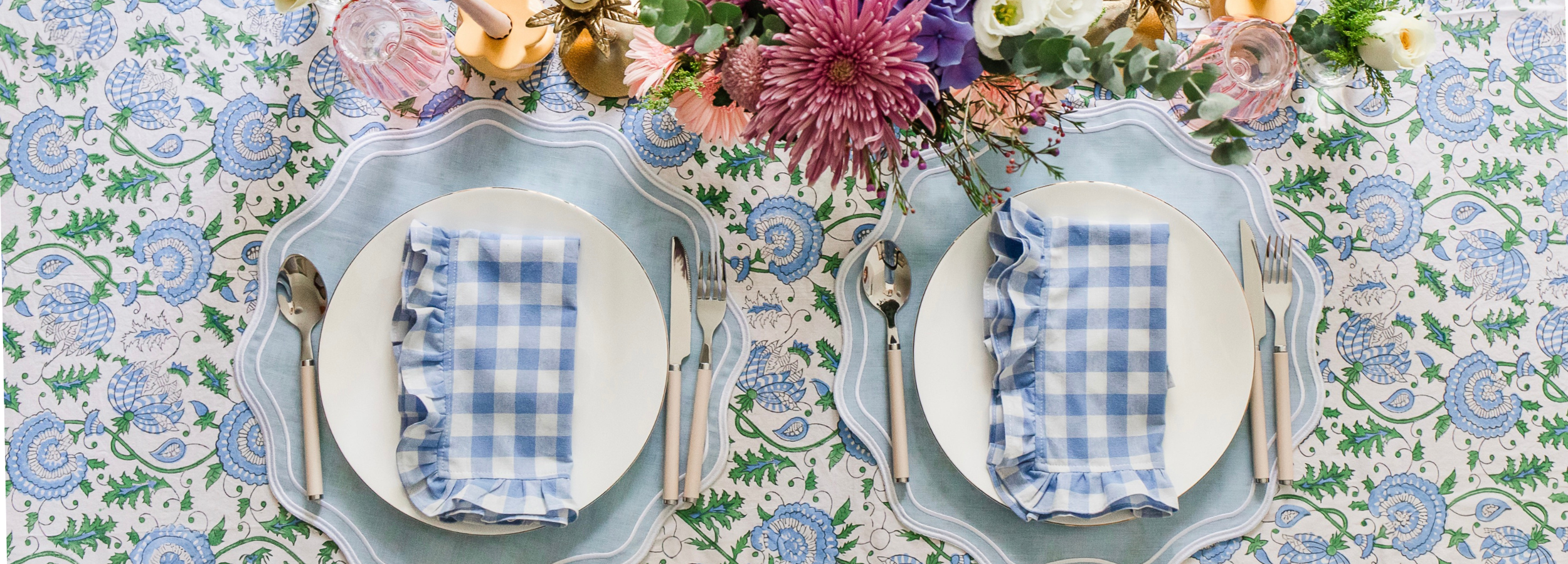
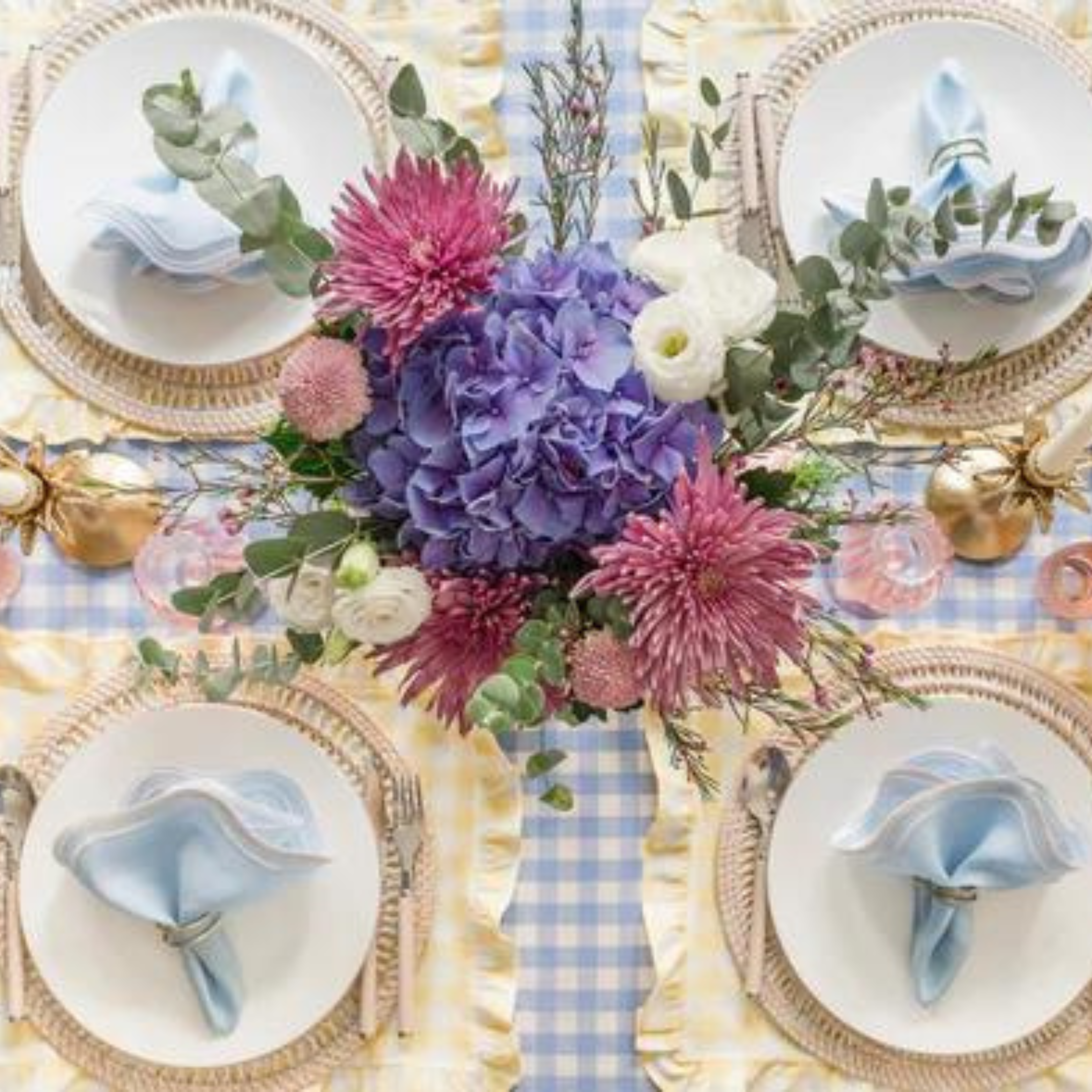
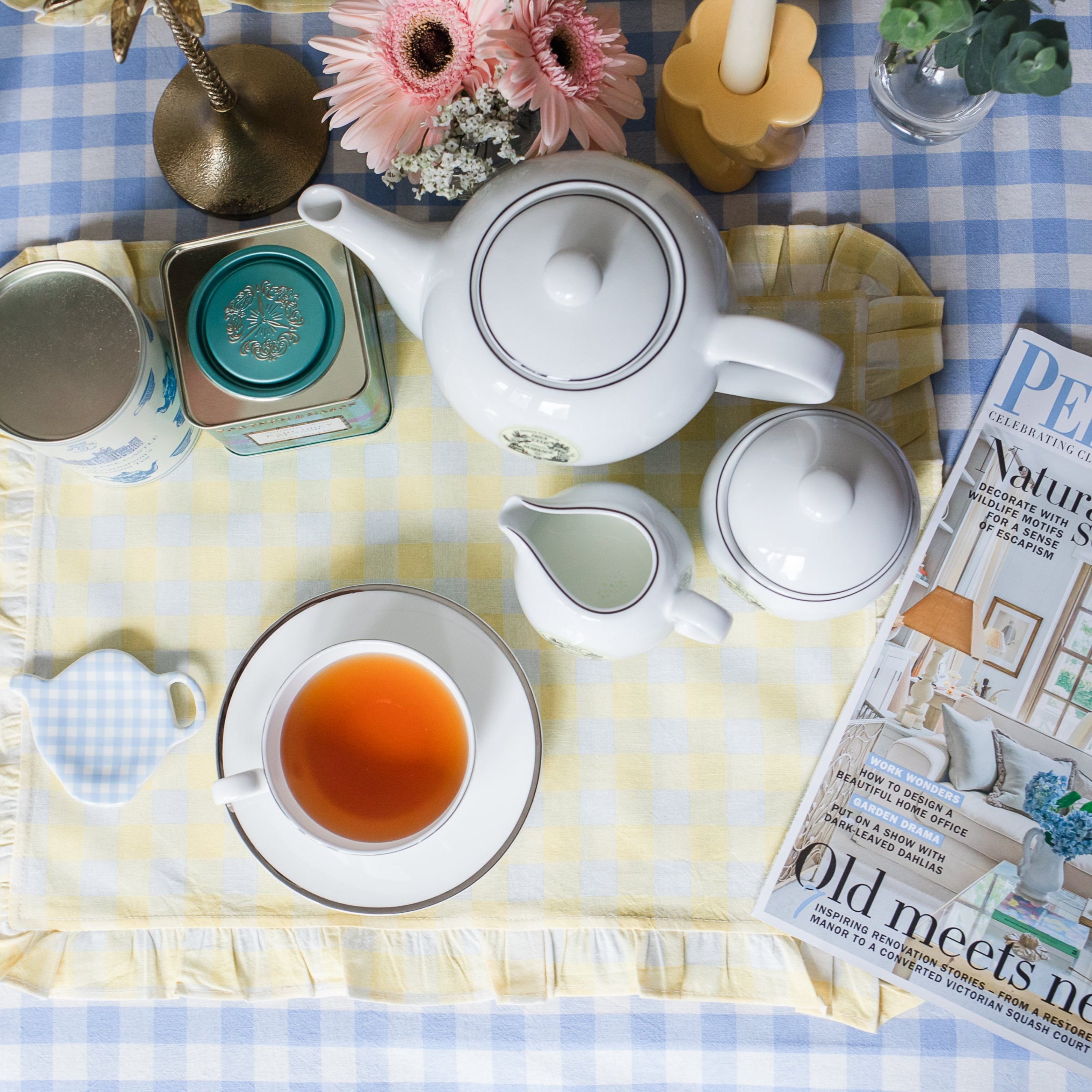
For everyday meals, I love a smaller gingham pattern in a soft, quiet colour — pastel blue, light yellow — paired with simple linen napkins. It creates a table that feels considered without feeling fussy. The kind of setting that makes a Tuesday dinner feel like it matters. Because it does.
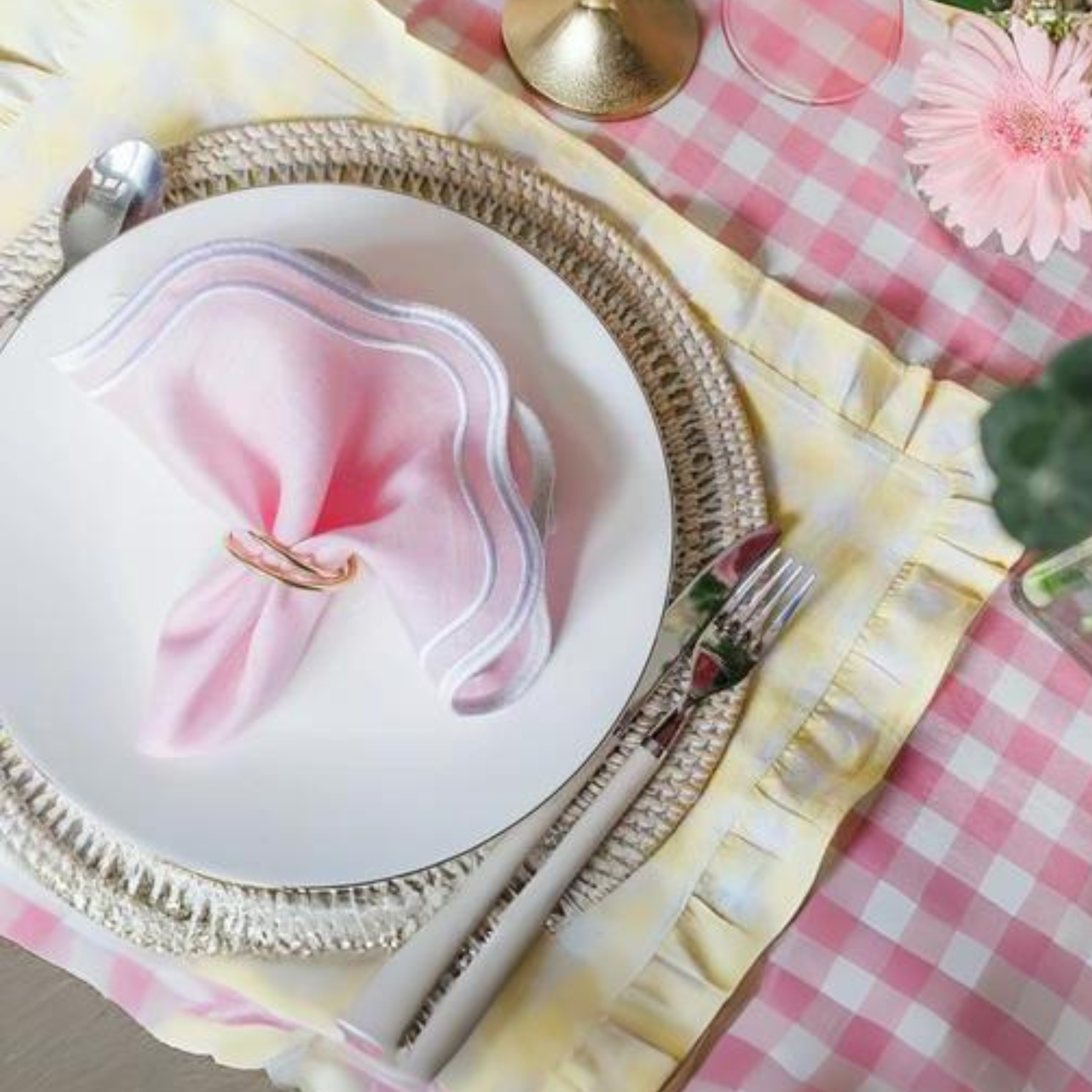
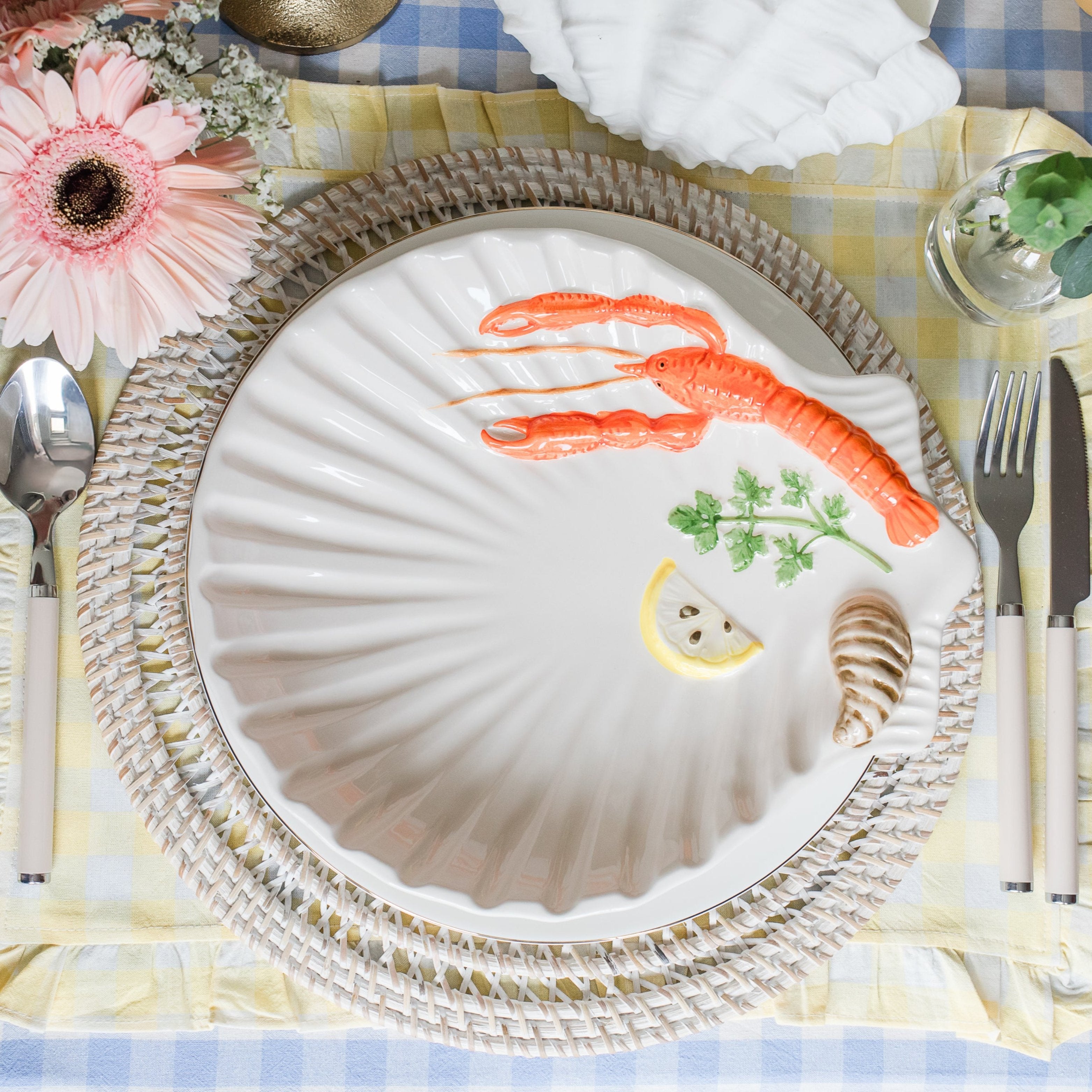
For the times when you are hosting — and I know Singaporeans know how to host — go a little bolder. A beautiful pink gingham tablecloth with yellow placemats, white ceramic serving pieces and a simple arrangement of flowers is one of the most effortlessly beautiful tables I know how to set. It looks like it took real effort. It never does.

How to Style Gingham in a Singapore Home
The question I hear most often is some version of this: will gingham look too country for my space?
I understand the hesitation. There is a version of gingham that tips into themed territory — a little too self-conscious, a little too much. But that version happens when gingham is overdone, when it appears everywhere at once in strong colours rather than chosen with intention.
One or two gingham pieces in a room, balanced with the right companions, reads as warm and refined. Not country. Not costume. Just home.
In a Singapore home, gingham finds its best partners in the things we already tend to love — light timber furniture, rattan accents, unglazed ceramics, woven placemats. These natural textures speak the same quiet language as gingham: honest materials, made to be used, better for the living. Together they create something that feels like it has always been there.
Our tropical light helps too. Singapore homes are flooded with it, and gingham in soft English tones — pastel blue, yellow and pink — catches that light in a way that gives a room a warmth you wouldn't expect. It is one of my favourite things about styling in Singapore. The light does half the work for you.

The one principle I would offer: let gingham be the pattern in the room. Give it space. Pair it with solids, with textures, with the quiet beauty of things that don't compete. A gingham tablecloth on a timber dining table, rattan chairs, a ceramic jug, a stem or two of greenery — that is a complete story. Nothing else is needed.
Why Gingham Belongs in a Farmhouse and Cottagecore Home
Gingham endures — through every design trend, every decade, every shift in what's considered current — because it carries something in its weave that goes beyond aesthetics.
It is a humble pattern. It has no pretence. It belongs on a table that is meant to be used, in a kitchen that is meant to be cooked in, in a home that is meant to be lived in fully and without apology.
When I started Cherry Pie Farmhouse, I was looking for pieces that would make everyday life feel more beautiful — not in a precious, untouchable way, but in the way of things so well-made and genuinely lovely that using them daily feels like a small act of gratitude. A gingham tablecloth laid for a Tuesday dinner. A set of napkins pulled out not just for guests but for the ordinary Wednesday that deserves a little care too.
That is the cottagecore philosophy at its heart — and it is why gingham has been part of what we do from the very beginning. You can read more about the story behind Cherry Pie Farmhouse and why we source the way we do here.
A Few Things I've Learned Along the Way
Wash it and use it always. A gingham tablecloth that has been through a hundred meals has a quality that a brand new one simply doesn't. The gentle softening of the fabric, the way the colours settle — this is not wear. This is the piece becoming yours.
Don't match everything. The farmhouse table I love most is never perfectly coordinated. A ceramic that doesn't quite match the white of the napkins, a placemat in a slightly different natural tone, a flower stem placed rather than arranged. That gentle imperfection is what makes a table feel genuinely lived in rather than staged for a moment.
Let one piece lead. Start with a gingham tablecloth and let your napkins, placemats, and ceramics support it rather than compete. The table finds its own harmony from there.
Choose OEKO-Tex Standard 100 certified cotton where you can. Especially for table linen your family eats from daily, fabric certification matters. Cherry Pie Farmhouse is one of the few Singapore retailers carrying OEKO-Tex Standard 100 certified table linen — it is one of those details that is invisible until you know about it, and then you can't unknow it.

Frequently Asked Questions
Where can I buy gingham tablecloths in Singapore? Cherry Pie Farmhouse carries a beautiful range of gingham tablecloths, placemats and napkins made from OEKO-Tex Standard 100 certified cotton — one of the few Singapore retailers offering this certification in table linen. Available online at cherrypiefarmhouse.com and in store at Silk Walk, Tanglin Mall, and The Eco Club, I12Katong.
Is gingham suitable for a Singapore home? Absolutely. Gingham works well in compact Singapore spaces because its structured pattern adds visual warmth without overwhelming a room. Soft colours like pastel blue, yellow and pink are especially well-suited to the way light moves through Singapore homes.
What is the difference between gingham and checkered fabric? Gingham is a specific type of checked pattern woven from dyed and undyed threads, always in two colours — typically white plus one other. The checks are even and the pattern runs through the fabric rather than being printed on top, which is why it holds its colour and character through washing so beautifully. Checkered is a broader term covering any grid-based pattern, including those printed rather than woven. This is why a quality gingham tablecloth looks as good after fifty washes as it did on day one.
What is OEKO-Tex Standard 100 certified cotton? OEKO-Tex Standard 100 is an independent international certification that guarantees every component of a fabric — thread, dye, and finish — has been tested and found free from harmful substances. For table linen your family uses every day, it is the standard worth looking for. All gingham tablecloths, placemats and napkins at Cherry Pie Farmhouse carry this certification.
How do I style a gingham tablecloth in a modern Singapore home? Pair it with natural materials — rattan, iraca palm, light timber, unglazed ceramics — and keep everything else simple. Let the gingham be the pattern in the room and surround it with solids and textures. One statement piece, supported by quiet companions, is always the right approach.
How do I care for a cotton gingham tablecloth in Singapore's climate? Machine wash on a gentle cycle in cool water and line dry. The humidity in Singapore actually helps cotton relax and soften beautifully over time. Avoid tumble drying on high heat to preserve the fabric and its colour.
Come and find us — we would love to help you find the piece that makes your table feel like home. Visit our stockists at Tanglin Mall and i12Katong, or shop the full gingham tablecloth, placemat and napkin collection at cherrypiefarmhouse.com.
Free shipping on all orders within Singapore. Worldwide shipping available, with free shipping on certain order thresholds.
- Michelle
About the Author
Michelle is the founder of Cherry Pie Farmhouse, Singapore's home for farmhouse and cottagecore living. She sources directly from makers all over the world, including England, Italy, and India, and has been offering handcrafted homewares and gifts for Singapore homes since 2023. You can read her story here.